
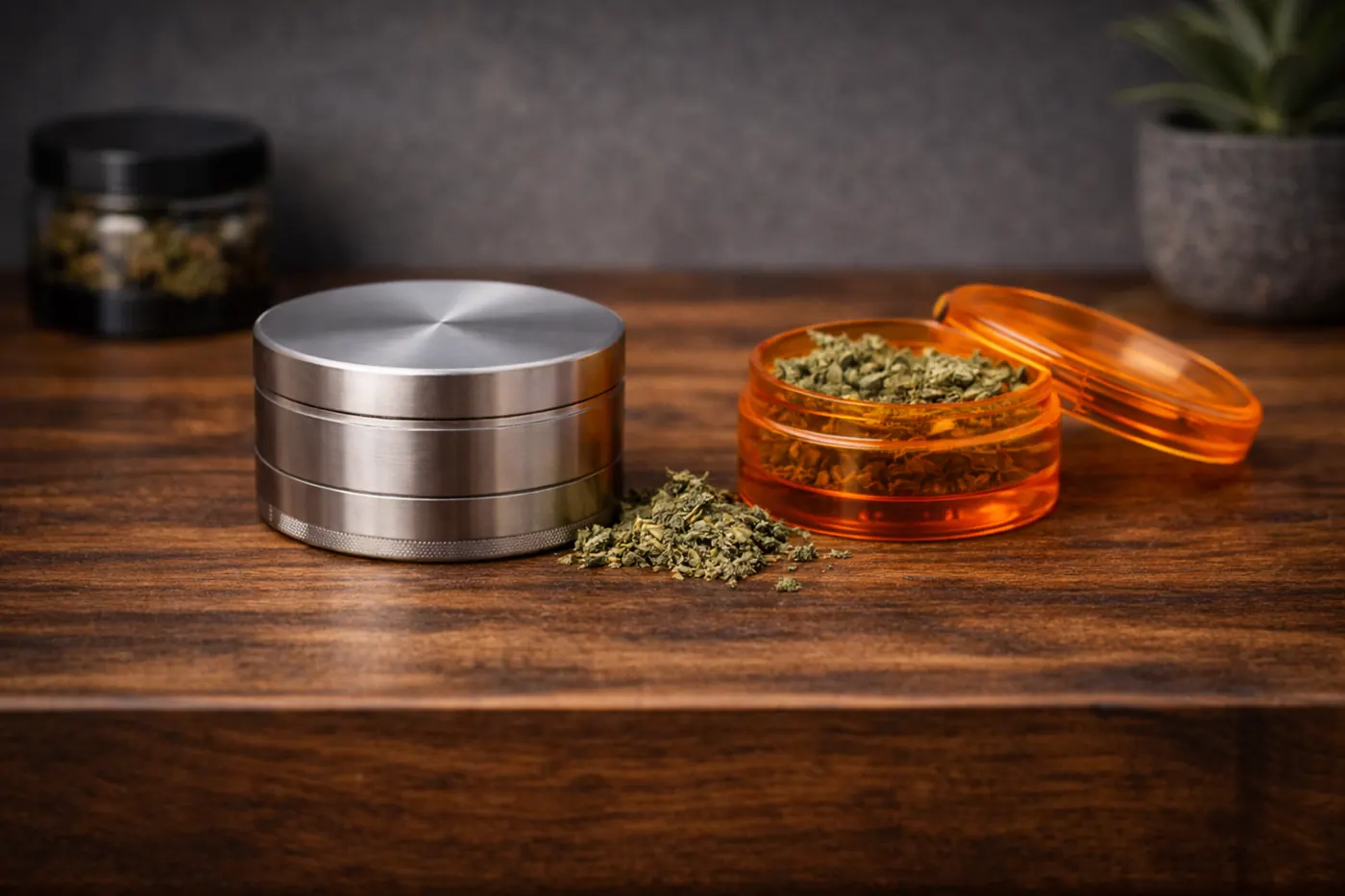
This only matters if you are already far enough into grinder shopping that the material question changes the way you buy. For most people, the real question is whether the grinder feels worth buying at all. Still, if you are down to aluminum vs stainless steel, the difference is mostly about feel, weight, and how premium you want the purchase to feel.
See grinder options on Amazon or browse grinder picks at Smoke Cartel.
Quick answer
Aluminum usually makes more sense for most people because it gives you a strong balance of quality and practicality. Stainless steel makes more sense if you specifically want something heavier, more premium-feeling, and do not mind paying for that.
Why aluminum usually wins
Aluminum is usually the safer buy because it feels good enough without pushing the product into a more niche or more expensive lane.
Disclosure: This page may contain affiliate links, which means GreenGiggles may earn a commission if you buy through them, at no extra cost to you. As an Amazon Associate I earn from qualifying purchases.
Why stainless steel appeals to some buyers
Stainless steel is mostly for people who want the grinder to feel more substantial and more premium in the hand.
Who should care about this
If you are the kind of buyer who notices materials and hand feel quickly, this may matter to you. If not, it probably should not drive the whole decision.
What matters more than material
Overall design, hand feel, and how the grinder behaves in real use still matter more than the label on the material.
Bottom line
Most people should treat aluminum as the safer default. Stainless steel only really wins if you know you want that heavier premium feel.
What real use tends to reveal
The material choice matters most in the daily details: weight, turning feel, cleanup, and whether the grinder still feels solid after sticky flower and repeated use.
What owners usually notice first
Aluminum tends to win the first-impression test because it feels familiar: light enough to use one-handed, solid enough that it does not feel like a novelty purchase, and easy to toss into a drawer without thinking about it. Stainless steel usually feels more serious right away. The extra weight can make the grinder feel like a tool instead of a cheap accessory.
A recurring theme in owner discussions is that material only matters after the basics are right. Good teeth, clean threading, a secure lid, and comfortable grip matter more than whether the listing says aluminum or stainless. A mediocre stainless grinder is still mediocre.
What starts to annoy people later
The annoyance usually shows up in the hand feel and upkeep. A lightweight aluminum grinder with rough threads can start to feel cheap quickly. A heavy stainless grinder can feel satisfying at home but less convenient if you move it between a nightstand, tray, and travel pouch.
People upgrading from cheaper grinders often notice small mechanical details first: smoother turns, less squeaking or sticking, better lid alignment, and fewer moments where the grinder feels like it is fighting them. Those details matter more over months than the material label alone.
Best fit
Choose aluminum if you want the safer daily-driver choice: lighter, usually less expensive, and easier to live with. Choose stainless if the grinder mostly stays at home and you genuinely like heavier gear, like a metal flashlight, camera lens, or desk tool that feels overbuilt in a good way.