
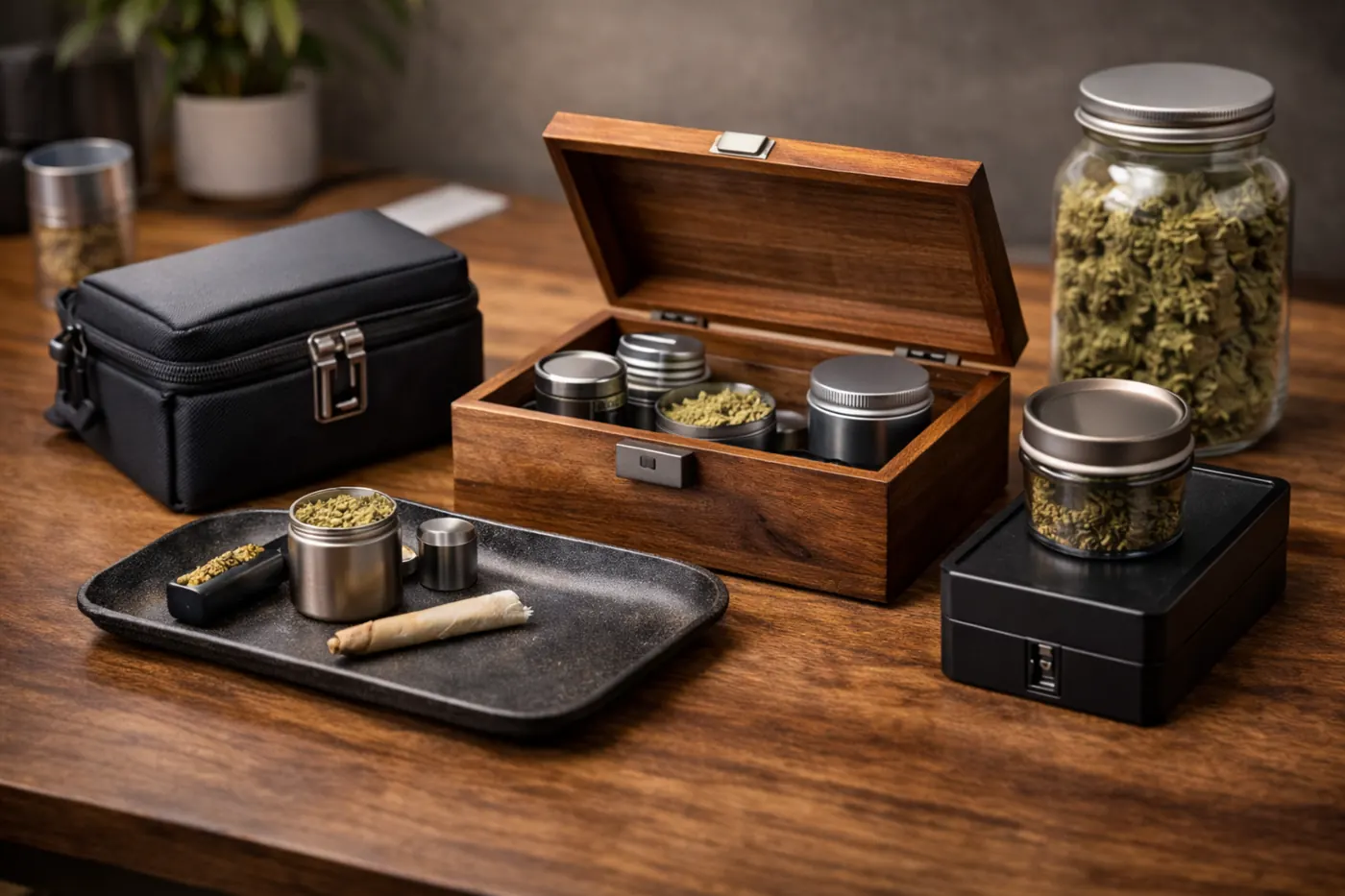
Studio apartments make every setup choice more obvious. If the gear is messy, bulky, or too visible, there is nowhere for that problem to hide. The best studio setup is compact, calm, and easy to put away fast.
Quick answer
For most studio apartments, the best setup is one smell-proof storage home, one small daily-use zone, one compact maintenance kit, and as little loose equipment as possible.
Keep the whole setup compact
Studio life rewards anything that takes up less space and asks for less visual attention. Bigger or more elaborate gear usually loses faster here.
Disclosure: This page may contain affiliate links, which means GreenGiggles may earn a commission if you buy through them, at no extra cost to you. As an Amazon Associate I earn from qualifying purchases.
Use one main storage home
A single bag, case, or compact box usually does more than trying to spread the setup across several little storage ideas.
Control the daily-use surface
One small tray or one defined zone is enough. If the setup keeps expanding across furniture, it is already too much for a studio.
Keep maintenance hidden
Maintenance gear should live in a small pouch or drawer zone so it does not become visible clutter.
Bottom line
Studio setups work best when they are easy to close up and easy to ignore. Compact, easy to live with storage matters most.
What owners usually notice first
Studio apartments punish clutter. A recurring theme in small-space setup discussions is that people do not just want things hidden; they want the room to feel normal again after use. The best studio setup works like a compact home-entertainment station or travel tech pouch: everything has a home, and the reset does not require rearranging the apartment.
Buyers often seem happiest when the setup has one main container, one small surface, and one charging/cleaning zone. Once the gear spreads into three drawers and two shelves, it stops feeling discreet.
What starts to annoy people later
The annoyance is usually not the big item. It is the small stuff: screens, brushes, charging cables, lighters, tiny containers, grinder residue, and half-used accessories that do not have a place. In a studio, those details stay visible because the bedroom, living room, and work area are often the same room.
The most common regret is buying products one at a time without thinking about where they will live together.
What is worth paying more for
Pay more for fewer, better pieces: a storage case with enough internal organization, a grinder that feels good to use and clean, and charging gear that does not create cable spaghetti. What is probably overkill is a large stash box or multi-piece organizer that looks great in product photos but takes up too much prime space.
Studio-apartment reality
The best test is simple: can you put the whole setup away before someone knocks, before a video call, or before you want the room to feel like a living space again? If the answer is no, the setup is too spread out.
Keep reading
- Best Discreet Weed Storage for Apartments and Small Spaces
- Best Smell-Proof Bags for Apartments and Small Spaces
- How to Build a Low-Clutter Cannabis Setup
- Best Home Organization Upgrades for a Cleaner Cannabis Setup
- Best Dry Herb Vaporizers for Apartment Living
- Best Drawer-Based Setups for Smaller Spaces
- Best Bedroom Odor-Control Setup for Cannabis Users