
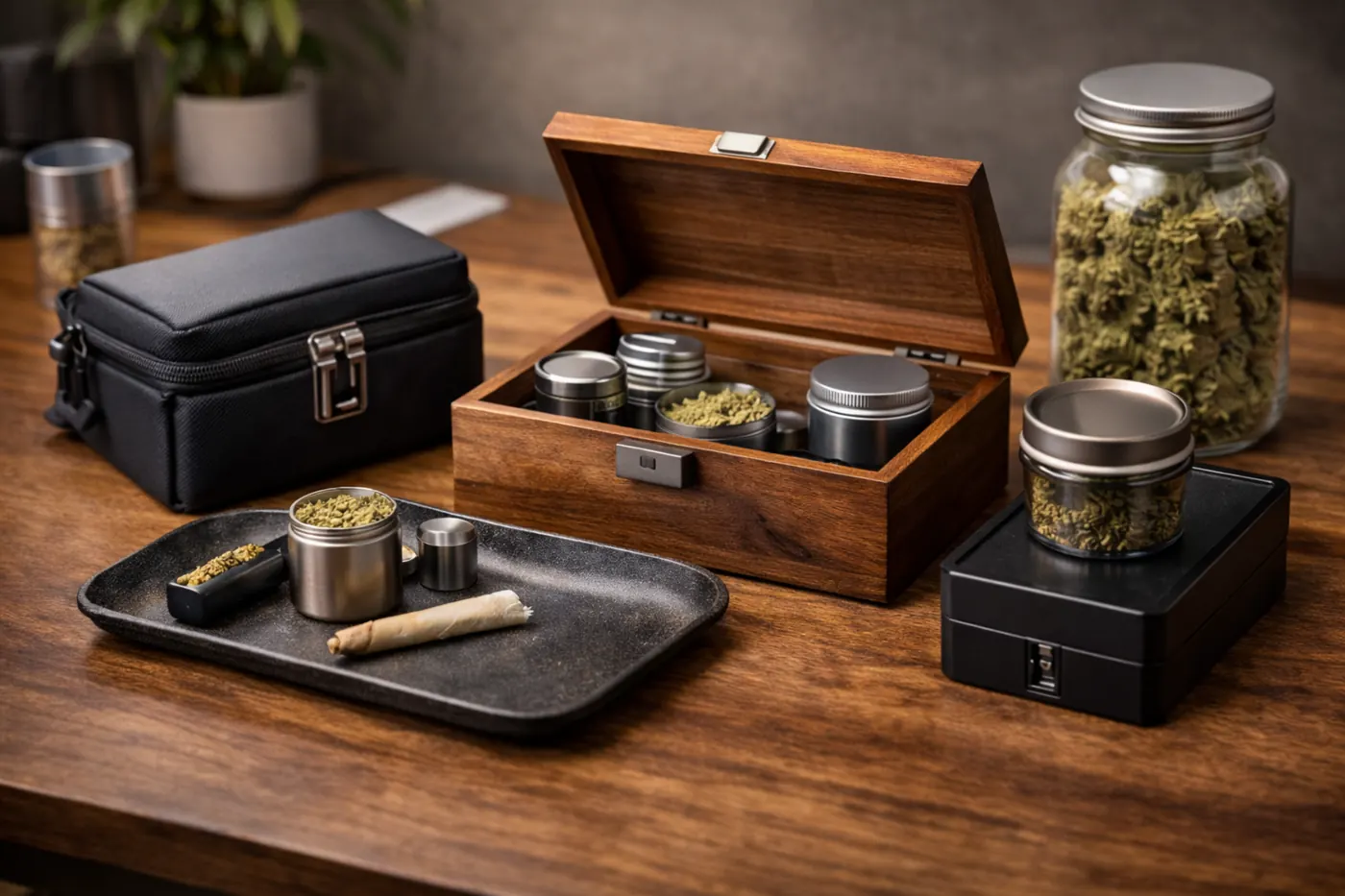
Home odor control only works when it feels realistic. The goal is not to turn your room into a lab. The goal is to keep the setup from lingering in soft surfaces, shared spaces, and the overall feel of the room. The best odor-control products do not replace good storage. They support it.
Quick answer
Start with a smell-proof storage bag or case. Add a small air purifier if the room still needs help. Use carbon odor pouches or similar products for drawers, closets, and contained storage. Skip the giant pile of gimmicky accessories unless they solve a real problem in your room.
Start with storage, not gadgets
If the main storage is sloppy, odor-control add-ons become cleanup for a problem you never solved. A good smell-proof bag or structured case does more than most extra accessories.
- Best first move: upgrade storage before buying room accessories.
- Why that matters: better containment solves the smell problem closer to the source.
Disclosure: This page may contain affiliate links, which means GreenGiggles may earn a commission if you buy through them, at no extra cost to you. As an Amazon Associate I earn from qualifying purchases.
Air purifiers: good support, not magic
A small air purifier can help in apartments, bedrooms, and shared rooms, especially if you care about the room feeling fresher overall.
- Best for: room-level support once the main storage is already decent.
- Not great for: trying to fix a setup that still sits out loose and half-contained.
Think of a purifier as backup. It helps the room recover faster, but it is not a replacement for better habits.
Carbon odor pouches and small containment tools
These make the most sense when you already have the basics handled and just want a little extra help inside drawers, bags, or closets. They are support pieces, not your main defense.
What to skip
Skip anything that feels like you are buying a solution to a problem your storage should already solve. If a product only sounds impressive in marketing language, it probably is not helping much in real life.
What actually works best at home
For most people, the best home smell-control setup is simple: one good storage home, fewer loose items, and room support only where the room itself still needs help. That gives you a setup that feels calmer instead of more complicated.
Bottom line
For most homes, better storage does more than more accessories. Add a purifier if your room still needs help. Add small odor-control extras only after the main setup is already under control.
What owners usually notice first
Most odor-control accessories feel useful on day one because they create a sense of control. The longer-term pattern is different: people keep the accessories that fit into the routine and abandon the ones that require special effort. A carbon pouch that stays inside a storage bag is easier to keep using than a separate product you have to remember every time.
Buyers often seem happiest when odor control is layered but not complicated: sealed storage first, small cleanup tools second, room support third.
What starts to annoy people later
The annoyance usually comes from products that add clutter. Extra sprays, loose odor packs, oversized purifiers, and random containers can make the setup feel less discreet. People also get disappointed when soft goods wear out: zippers stop feeling tight, hook-and-loop closures collect lint, or cheap cases lose their shape.
That is why odor-control gear should be judged like travel gear. The material, closure, and daily handling matter as much as the marketing claim.
What is worth paying more for
It is worth paying more for better closure quality, replaceable filters when applicable, washable or wipeable surfaces, and storage that makes the reset faster. It is usually not worth paying more for a bulky accessory that only solves one narrow problem and has nowhere to live when not in use.
Setup reality
The best home odor-control setup should look almost invisible when you are done using it. If the room still has loose tools, an open tray, a sticky grinder, and a bag that is never fully closed, more accessories will not fix the basic routine.
Keep reading
- How to Reduce Cannabis Smell in an Apartment
- Best Smell-Proof Bags for Apartments and Small Spaces
- Best Air Purifiers for Cannabis Smell in Apartments
- Best Home Organization Upgrades for a Cleaner Cannabis Setup
- Best Smoke Filters for Small Spaces
- Best Bedroom Odor-Control Setup for Cannabis Users
- Best Dry Herb Vaporizers for Apartment Living