
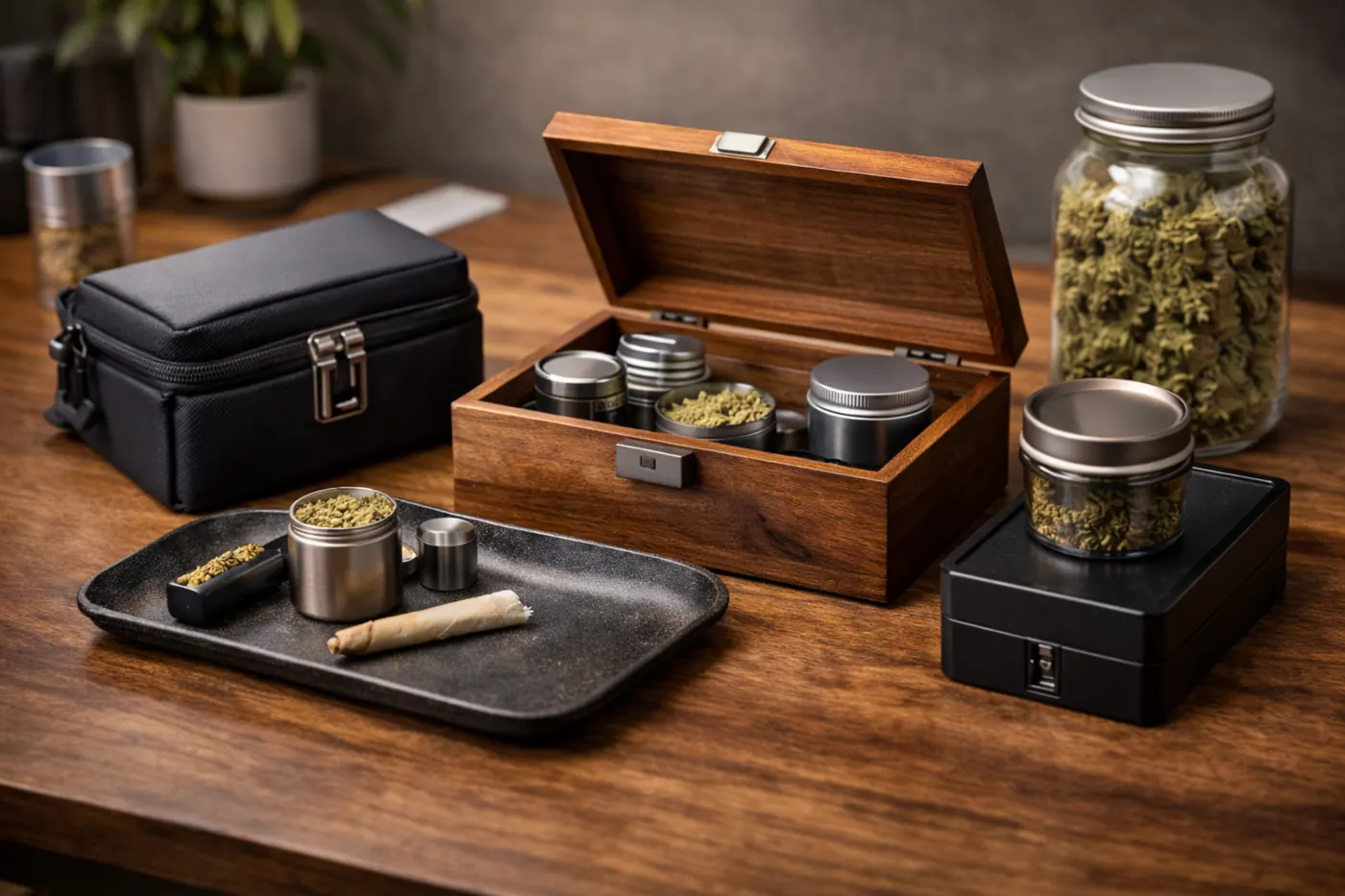
Shared spaces punish sloppy storage faster than private ones do. If your setup lives around roommates, partners, family, or common areas, the goal is not just containment. It is keeping the whole thing easy to put away and easy to ignore.
Quick answer
For shared spaces, the best setup is usually one compact smell-proof bag or structured case, one clearly defined storage spot, and as little loose gear as possible. The less spread, the easier the setup is to live with.
Use one main storage home
The biggest mistake in shared spaces is letting the setup become multiple little objects. One bag or case solves more than five accessories ever will.
Disclosure: This page may contain affiliate links, which means GreenGiggles may earn a commission if you buy through them, at no extra cost to you. As an Amazon Associate I earn from qualifying purchases.
Keep it visually quiet
Shared spaces feel calmer when the storage looks like normal organization gear instead of a specialty product making a statement.
Avoid small-item clutter
Trays, clips, jars, chargers, tools, and wipes all become bigger problems in shared rooms. If it does not live inside the main storage system, it should probably not be in the setup.
Best types of storage
Soft smell-proof bags work well if you want flexibility. Structured cases work better if you want order and less rummaging. Which one is better depends on whether you value visual calm or internal separation more.
Skip it if
Skip oversized boxes, novelty bags, and multi-piece stations if the setup has to live near shared furniture. They may feel organized at first, but they often make the room work harder around the gear. Shared-space storage should disappear into the room, not become another thing everyone has to make space for.
Best fit
- Shared apartment: compact smell-proof bag inside a private drawer or closet bin.
- Partnered household: structured case if both people want the setup contained and predictable.
- Occasional guests: plain storage that does not invite questions when someone sees it.
- Mixed-use room: one small home base, no permanent gear spread, and no visible charging clutter.
Setup reality
The shared-space setup should be designed around the fastest cleanup, not the prettiest layout. A tray can be useful while you are using the setup, but it should not become the permanent storage system. A good bag or case gives you a finish line: everything goes back in, the zipper closes, the room returns to normal.
What starts to annoy people later
The annoyance usually starts when the setup spreads. One box becomes a box plus a tray. Then a lighter sits somewhere else. Then cleaning wipes live in another drawer. In a private room that is mildly annoying; in a shared space it becomes visual clutter and a courtesy problem.
Another recurring issue is overestimating how discreet a “cool” accessory looks to other people. In shared rooms, plain is usually better. A simple dark pouch, small case, or drawer organizer often blends better than anything that looks designed to be noticed.
What owners usually notice first
In shared homes, people notice the routine before they notice the gear. A storage setup works when it prevents awkward little moments: a grinder left out, a smell-proof bag half-open, a charger stretched across a shared table, or tools mixed into normal household drawers. The best setup is boring, contained, and easy to reset before anyone has to think about it.
Buyers often seem happiest when the whole kit has one obvious “home base.” It is the same logic as a good remote-control tray or charging station: the item itself matters, but the habit it creates matters more.
Bottom line
Shared-space storage should be compact, contained, and easy to put away fast. One good home for the setup beats a more elaborate system almost every time.
Keep reading
- Best Discreet Weed Storage for Apartments and Small Spaces
- Best Smell-Proof Bags for Apartments and Small Spaces
- Best Weed Accessories for Adults Who Hate Clutter
- How to Build a Low-Clutter Cannabis Setup
- Best Drawer-Based Setups for Smaller Spaces
- Best Minimalist Cannabis Setup for Adults
- Best Smell-Proof Backpacks for Adults